A customer has two complaints in one bathroom: the new bath/shower mixer needed extra valves the old taps never had, and since they went in the shower valve has started to weep. Both are the same story, and the story is about what a check valve does to trapped water.
The short answer
This section is four separate jobs that keep meeting: choosing a tap for a duty, holding a flow, holding a pressure, and dealing with what happens when a check valve closes a section of pipe.
Three taps for three problems
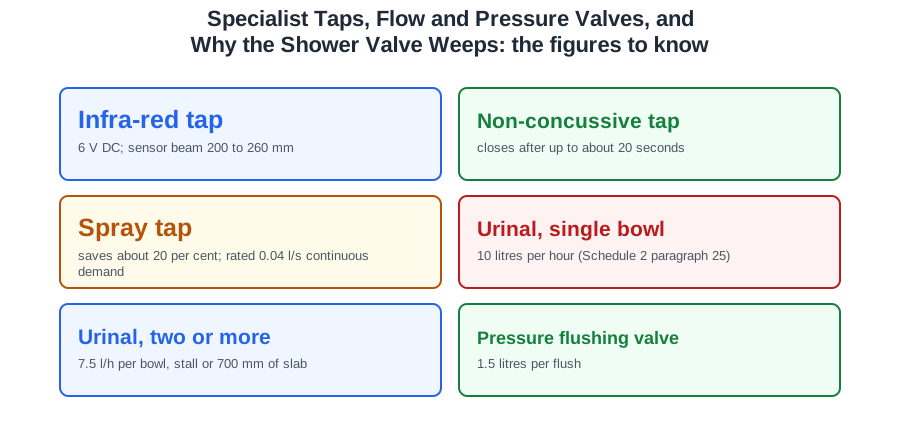
A hospital washroom refit asks for one tap nobody touches, one that cannot be left running, and one that uses as little water as possible.
Infra-red operated tap. Runs on 6 V DC from a transformer. The sensor eye emits a beam about 200 to 260 mm long; breaking it opens a solenoid valve, and withdrawing the hands closes it. Hot and cold are usually pre-mixed through a thermostatic blending valve. Hands-free, so it stops the spread of germs, cannot be left running, saves water, and blended, prevents scalding.
Among ordinary taps, the one chosen in a hospital washroom to keep contamination to a minimum is the lever tap — worked with the wrist or elbow so no hand touches it.
Non-concussive (self-closing) tap. A spring-loaded plunger: pressing the head opens the tap and the spring closes it after a set period, adjustable to about 20 seconds. Benefits: it cannot be left on, most are vandal-proof, and the limited run reduces scalding risk. Drawbacks: the rapid closure can cause water hammer, it needs regular maintenance, it blocks with grease or scale, and the small discharge may leave waste pipes below self-cleansing velocity.
Spray tap. Breaks the flow into a fine spray, or an aerator adds air, cutting consumption by around 20 per cent. Where the aim is minimum water use, this is the choice. BS 8558 rates a spray tap as a continuous demand of 0.04 l/s for sizing, and exempts an appliance served only by spray taps from the waste plug requirement.
The urinal that flushes all night
Schedule 2 paragraph 25 limits an automatically flushed urinal cistern to 10 litres per hour for a single bowl, and 7.5 litres per hour per bowl, stall or 700 mm of slab for two or more. A pressure flushing valve is limited to 1.5 litres per flush.
Unless the urinal is flushed manually or electronically after use, the pipe to the cistern must have an isolating valve controlled by a time switch plus a lockable isolating valve, or an equally effective automatic device.
Four controls stop night-time flushing:
- Time switch and solenoid valve — fills only during occupied hours.
- Hydraulic flush control valve — the one with no wiring. It opens when it detects a drop in hydrostatic pressure as other taps or WCs are used, passing a measured slug of water. Busy night, frequent flushes; empty pub, none at all.
- Infra-red (PIR) detector — senses a person and opens a solenoid for a short period.
- Trickle controller — fills very slowly if no movement is detected.
A long range of bowls needs separate controllers, so one visitor does not flush every bowl in the row.
Flow limiting valve or pressure reducing valve?
They sound similar and they do opposite things, which is exactly why the exam pairs them.
A flow limiting valve passes a set flow irrespective of the pressure upstream, using an interchangeable cartridge covering about 0.07 to 0.43 l/s. Fitted to basins, baths, sinks, bidets and WC inlets, it balances hot and cold, stops one appliance starving outlets higher up, and makes pipe sizing, cistern capacity and pump duty predictable. That is the answer to a hotel where the third-floor shower dies whenever the ground-floor kitchen runs.
A pressure reducing valve to BS EN 1567 gives a lower, steady downstream pressure under both flow and no-flow conditions — drop tight. It senses the pressure either side of a diaphragm balanced against a spring: with no flow the downstream pressure pushes the seat shut so the pressure cannot creep up; when a tap opens the downstream pressure falls and the spring opens the valve. A strainer upstream protects the seat from grit.
Mains pressure varies from under 1 bar on old mains to 10 bar on new ones, and pressure above about 4 bar wears fittings by erosion and causes noise, dripping taps, leaking heaters and water hammer. BS 8558 clause 4.3.29 and BS EN 806-2 clause 15.2.2 both call for a PRV where the pressure can exceed the appliances' maximum design pressure.
The distinction, in one line: a flow limiter does not care what the pressure is and lets a fixed volume per second through; a PRV does not care how much is flowing and holds a fixed pressure downstream.
Shower pumps
A gravity mixer shower needs a minimum head of about 1 m (1,000 mm) from cistern base to shower head. Below that, fit a pump.
A twin impeller pump sits on the inlet side and boosts hot and cold separately before they meet, so the mixer sees two balanced supplies. A single impeller pump sits on the outlet and boosts the blended water, which suits concealed valves and deluge heads where the mixer cannot easily be fed by a pump.
In a positive-head installation the pump is switched by a flow switch: moving water lifts the switch and closes a micro-switch. It needs about 150 mm of head to lift. In a negative head, where the cistern is below the pump or the shower head is above the cistern, nothing moves on its own — so a small pressure vessel releases a burst of water to trip the flow switch, or a pressure transducer starts the pump directly.
Installation rules that are examined and also matter: take the hot from the cylinder through a 30 to 60° connection or an Essex flange so air goes to the vent and not the impeller; give the pump its own cold feed from the cistern, in 22 mm as far as possible; fit the supplied strainers on both inlets; and never feed a shower pump from the main.
One more that catches people: on a gravity system, poor flow at basins fitted with high-pressure taps is cured by changing them for low-pressure taps, not by fitting a pump.
Check valves, hammer, and the weeping shower valve
A bath/shower mixer is designed for equal hot and cold pressures, so it should not be fed with mains cold and cylinder-fed hot. The hose is the backflow risk, because the head can be dropped into dirty bath water below the spill-over level. Where that can happen, the hot and cold connections carry double check valves — the protection for a fluid category 3 risk — or the hose is held by a retaining ring so the head cannot reach below the rim.
Water hammer is the pressure wave set up when moving water is stopped suddenly by a quick-closing valve: a washing machine solenoid, a ceramic disc tap, a non-concussive tap. The wave can reach twice the working pressure. A shock arrestor — a brass, copper or stainless vessel with a piston or diaphragm cushioned by inert gas — absorbs the wave so it dies away. That is the fix for a bang every time the washing machine fills.
And the weeping shower valve. Check valves close off a section of pipe. If the water in that section warms — from a combi, an unvented cylinder, an instantaneous heater, or simply cold water at 4 to 16 °C standing in a warm building — it expands, and because the check valve will not let it back, the pressure rises sharply. That damages shower mixing valves, ceramic disc taps and the backflow devices themselves.
A mini expansion vessel on the closed side lets the expansion happen inside the vessel, and most shower manufacturers require one. BS EN 806-2 clause 10.4 gives the principle: where expansion water is contained, a vessel is fitted between the check valve and the heater, big enough for at least 4 per cent of the volume heated.
Where the pressure itself is the problem rather than expansion, the answer is a pressure reducing valve, not a vessel. Two symptoms that look alike, two different fixes.
🔢 The numbers worth memorising
- Infra-red tap
- 6 V DC; sensor beam 200 to 260 mm
- Non-concussive tap
- closes after up to about 20 seconds
- Spray tap
- saves about 20 per cent; rated 0.04 l/s continuous demand
- Urinal, single bowl
- 10 litres per hour (Schedule 2 paragraph 25)
- Urinal, two or more
- 7.5 l/h per bowl, stall or 700 mm of slab
- Pressure flushing valve
- 1.5 litres per flush
- Flow limiting cartridges
- about 0.07 to 0.43 l/s
- Fit a PRV above
- about 4 bar, or the appliance design pressure (BS EN 1567)
- Gravity mixer shower
- minimum head about 1 m
- Flow switch
- needs about 150 mm of head to lift
- Water hammer
- can reach twice the working pressure
- Mini expansion vessel
- at least 4 per cent of the volume heated (BS EN 806-2 clause 10.4)
⚠️ Where people go wrong
- Swapping the two valves over. A flow limiter fixes the flow whatever the pressure; a PRV fixes the pressure whatever the flow.
- Fitting a twin impeller pump on the outlet of a mixer. Twin goes on the inlet and boosts hot and cold separately; single goes on the outlet.
- Feeding a shower pump from the main. Never — and take the hot through an Essex flange or a 30 to 60° connection so it does not draw air.
- Fitting a pump to cure poor flow at basins with high-pressure taps on a gravity system. Change the taps.
- Treating a weeping shower valve as a faulty cartridge. A check valve traps expansion, and the fix is a mini expansion vessel between the check valve and the heater.
- Reaching for an expansion vessel when the problem is high mains pressure. That is a PRV job.
📝 10-Question Self-Test
Straight from the Level 3 course question bank. Click an option to see whether you got it right — the explanation appears instantly, and there is nothing to submit.
A non-concussive, self-closing tap opens when it is pressed and shuts itself after a set period, so it cannot be left running or jammed open. That is the answer wherever water might be wasted or misused, such as a public washroom. A gate valve or a lever ball valve isolates a length of pipe; neither controls what the person at the outlet does.
A spray tap breaks the flow into a fine spray, so hands are rinsed using far less water, which makes it the choice where minimum consumption is the aim; the withdrawn BS 6700 put the saving at as much as 50 per cent in water and fuel, and the current BS 8558 gives no saving figure, only a design demand of 0.04 L/s for a spray tap. Lever taps are specified in hospitals too, but for hygiene, because they can be worked with a wrist or an elbow; they do nothing to reduce the volume used.
A non-concussive, or self-closing, tap is pressed to open and a spring returns the plunger to close it after a set period, up to about 20 seconds, so it cannot be left running. The name refers to cushioning that closure so it does not knock. An infra-red tap gives the same timed flow, but through a sensor and a solenoid valve, with no plunger.
A twin-impeller pump has a hot and a cold inlet, and each is fitted with the supplied strainer so debris cannot reach the impellers and seals.
Schedule 2 paragraph 25 of the Water Regulations treats the requirement as met where an automatically operated flushing cistern fills at no more than 10 litres per hour for a cistern serving a single urinal. The 7.5 litres per hour figure is the one for two or more urinals, charged per bowl or stall or per 700 mm width of slab, so it does not apply to one bowl.
On a positive head installation the water itself starts the pump: as the mixer opens, the moving water lifts a flow switch, which closes a micro-switch and runs the motor, and it drops back when the flow stops. The head needed to lift the switch is small and is given by the pump manufacturer; no standard fixes it. A float switch belongs in a cistern, and a time clock cannot know when someone showers.
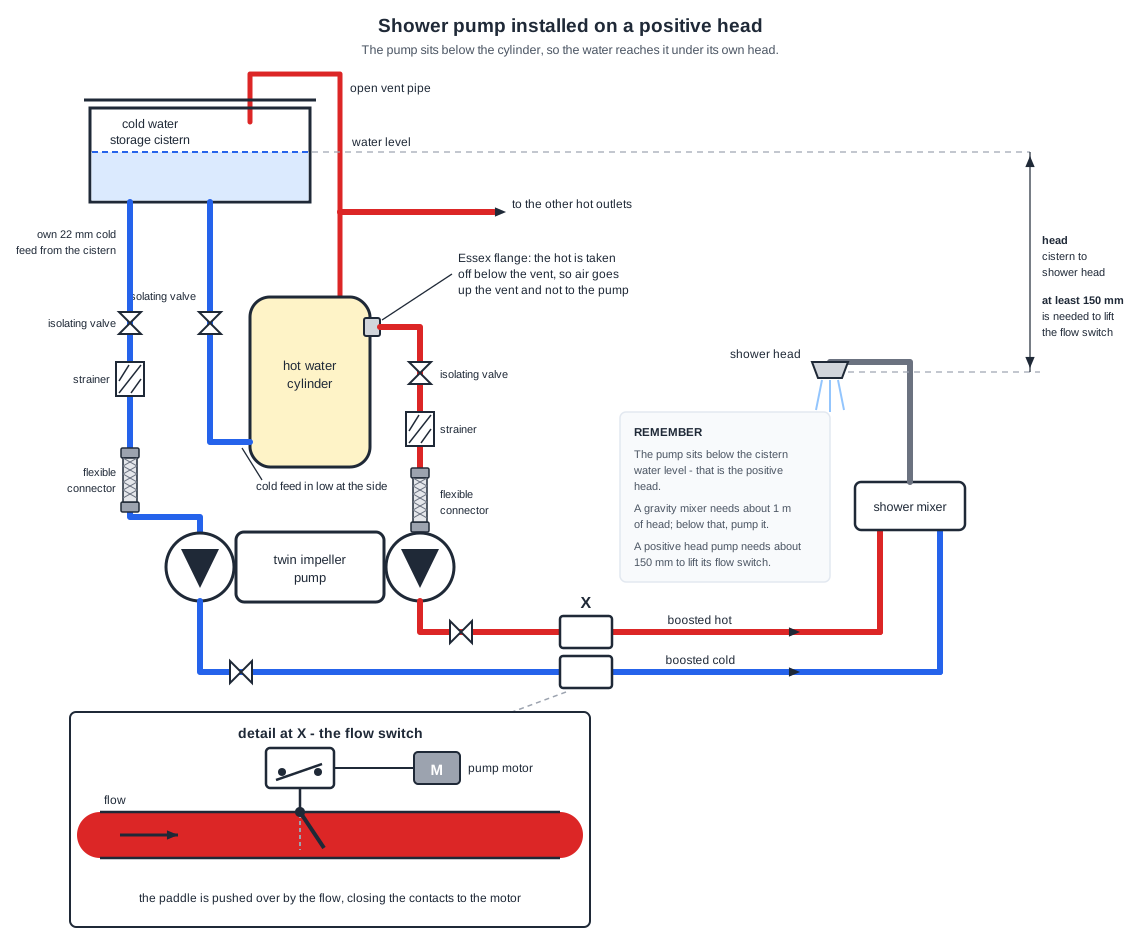
On a positive head the cistern stands above the pump, so water is already at it; opening the shower mixer starts a flow, the paddle in the flow switch is pushed over and its micro-switch closes the contacts to the pump motor. A “float switch” senses a water level in a cistern and has nothing to do with starting the pump when a shower is turned on.
A shock arrestor absorbs water hammer, the pressure wave set up when a washing machine solenoid or a ceramic disc tap stops moving water suddenly. Gas or air behind a piston or diaphragm takes the energy out of the wave, which can otherwise reach twice the working pressure. A single check valve prevents backflow and an air vent releases air; neither cushions anything.
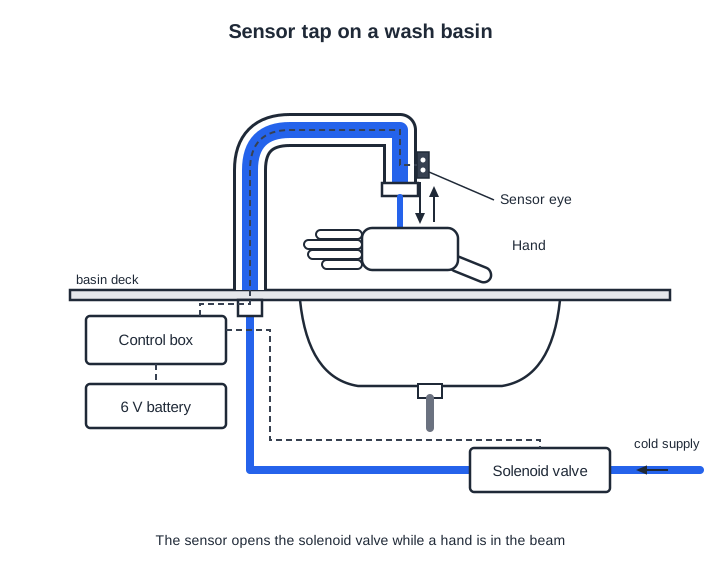
The sensor eye shown in the spout is infrared. It sends a beam out, reads the reflection off a hand, and the control box holds the solenoid valve open while the hand is in the beam. “An ultrasonic sensor eye” is the tempting one, but ultrasonic detection works on sound rather than a beam of light and is not what these taps use.
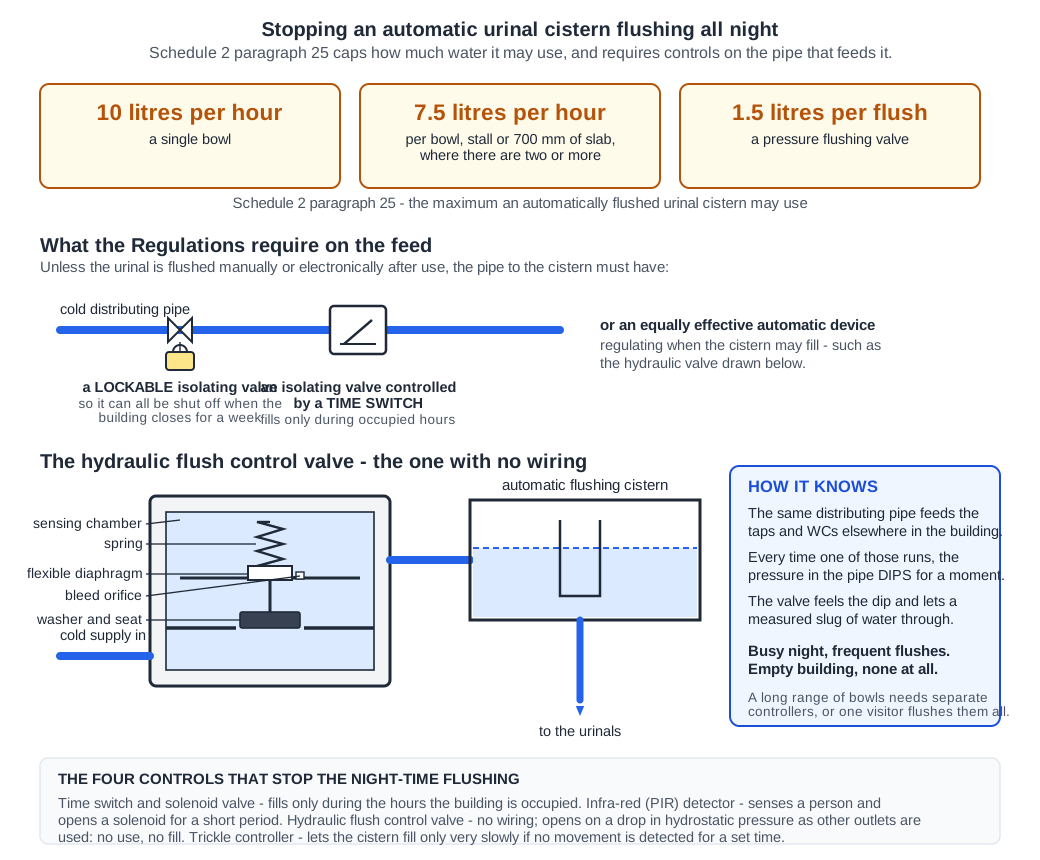
The device senses the pressure in the supply. When water is drawn elsewhere the pressure falls, the diaphragm lifts off its seat and a charge of water passes into the urinal cistern, so flushing happens only while the building is in use. Schedule 2 paragraph 25(1)(j) of the Water Regulations requires that automatic control. This one is purely hydraulic, so “an ultrasonic beam is broken” describes a presence-detecting flush control, not this valve.
Going further: the lessons behind this article
This article is the public answer. Unit 331 of the Level 3 course takes the same ground to the depth the exam and the synoptic assignment ask for, in 3 lessons:
- Specialist taps: infra-red, non-concussive, spray and urinal controls
- Flow limiting valves, pressure reducing valves and shower pumps
- Check valves, water hammer and the mini expansion vessel
- Cold water systems: the Unit 331 guide — every article on this unit in one place
- All PlumbMate articles — Level 1, 2 and 3
- The Level 3 course — the whole 8202-35 Diploma